Jamaican Gizzada Recipe
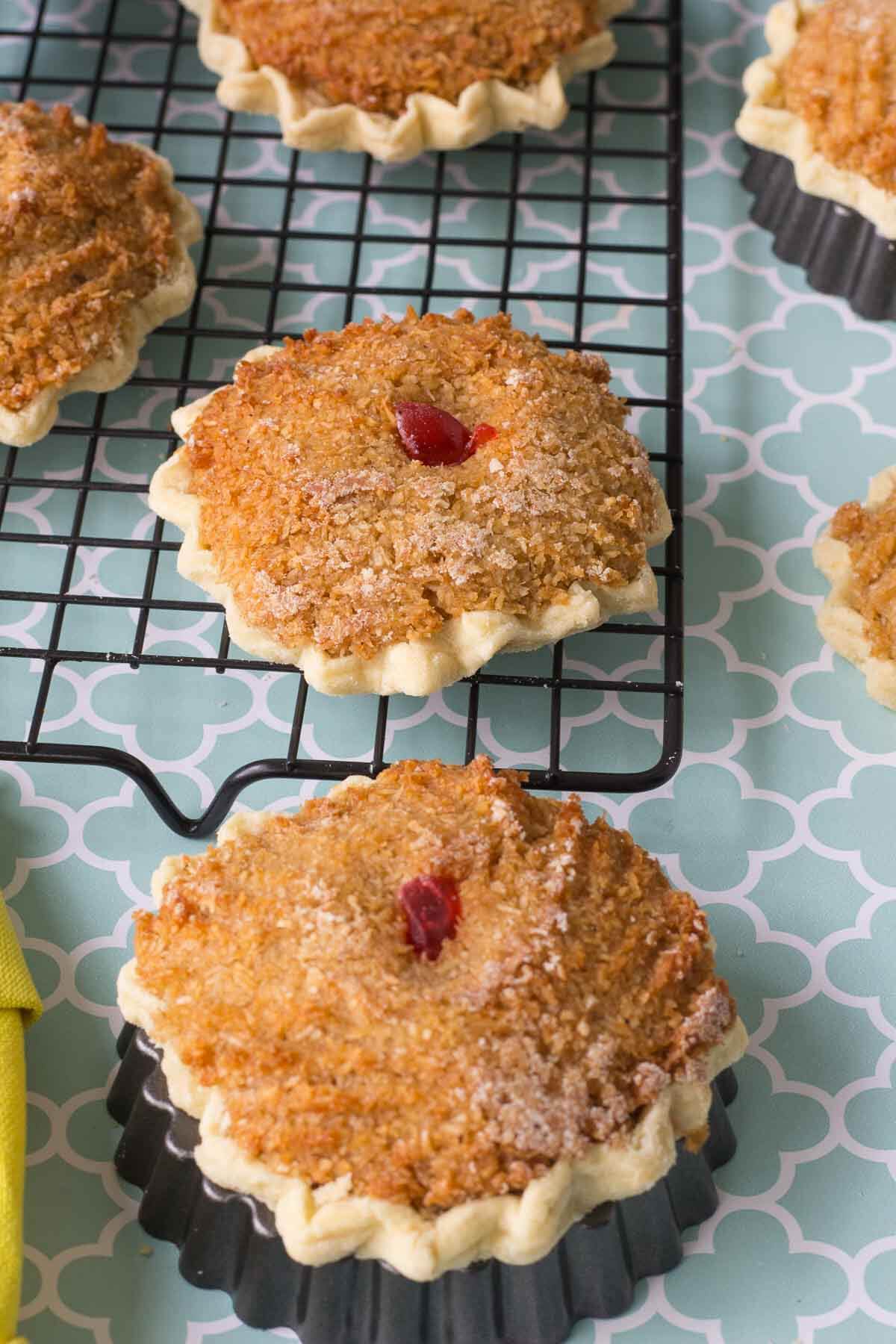
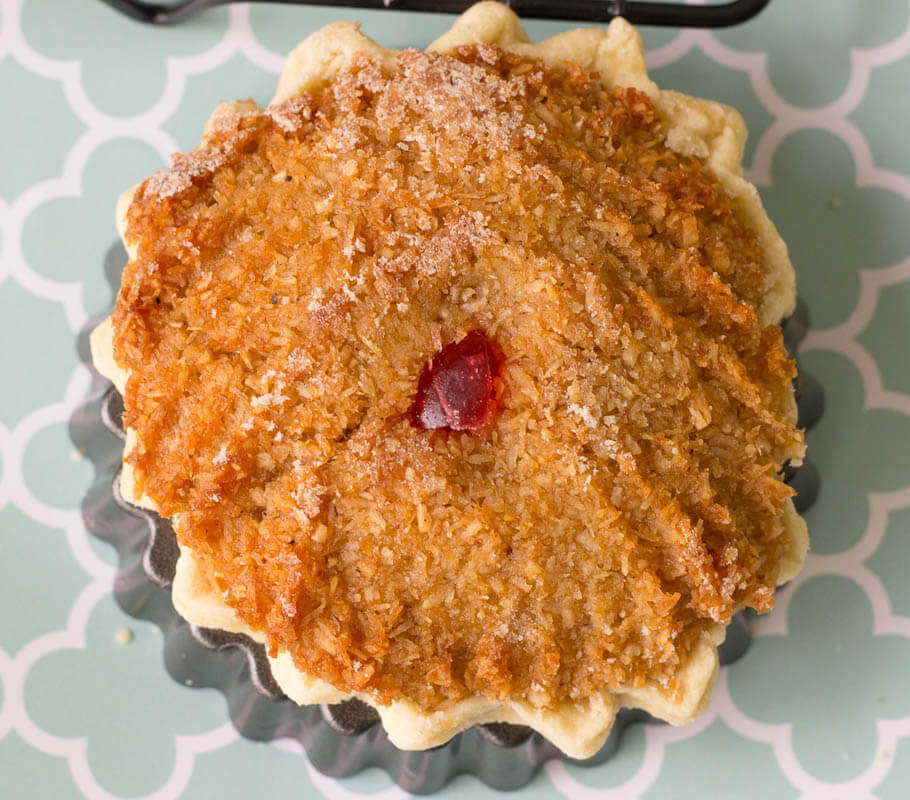
This gizzada recipe makes the popular Jamaican treat with a flaky pastry shell filled with sweet, spiced coconut. The coconut is cooked with brown sugar and nutmeg, then spooned into the pastry shells and baked until golden.
Gizzada isn’t something I grew up eating in Trinidad and Tobago, but it’s one of the Jamaican treats I’ve come to enjoy. And with my love of coconut treats, it really wasn’t a hard sell.
It reminds me a little of our Trinidad and Tobago coconut tart, since both pair pastry with a sweet coconut filling. But Jamaican gizzada has its own distinctive look and texture, especially that open top and pinched pastry shell.
What is gizzada?
Gizzada, also known as pinch-me-round, is a traditional Jamaican pastry made with a small pastry shell filled with sweetened grated coconut. Its name, pinch-me-round, comes from the distinctive way the pastry is pinched around the edges to create a raised border that holds the coconut filling.
The filling is usually made by cooking grated coconut with brown sugar and spices until the mixture becomes sticky and syrupy. It’s then added to the pastry shell and baked, giving you a crisp, flaky crust with a chewy coconut center.
Gizzada also reflects Jamaica’s long history of Spanish and Portuguese Jewish influence. The exact origin of the name isn’t entirely clear, but it has been linked to the Spanish word guisado, meaning “cooked” or “stewed,” as well as to Portuguese influence in Jamaica.
Gizzada vs. Trinidad coconut tart
If you’re familiar with Trinidad and Tobago coconut tart, gizzada may look a little familiar. Both are pastries filled with sweetened coconut, but the finished treats are quite different.
Gizzada is open-faced, with the pastry pinched around the edges to hold a generous amount of coconut filling. The filling is cooked with brown sugar and nutmeg until sticky and syrupy, giving it a chewy texture once baked.
Our coconut tart, on the other hand, encloses the coconut filling inside the pastry. The filling also has its own flavor profile, with spices and almond essence, so even though both start with pastry and coconut, they don’t taste or eat quite the same.
Basically, they’re Caribbean coconut cousins, not twins.
Gizzada ingredients
You only need a handful of ingredients to make gizzada. The recipe is divided into two parts: the pastry shell and the coconut filling.
Pastry Ingredients
- All-purpose flour: Forms the base of the pastry.
- Shortening and margarine: Using both gives the pastry its tender, flaky texture.
- Salt: A little salt balances the pastry.
- Cold water: Brings the dough together while helping to keep the fat cold.
Coconut filling ingredients
- Fresh dry coconut: Use the meat from a mature brown coconut and grate it into coarse shreds. You want some texture in the coconut rather than processing it too finely.
- Brown sugar: Sweetens the coconut and creates the sticky syrup that holds the filling together.
- Nutmeg: Adds a little spice to the coconut filling.
- Butter: Adds richness and gets stirred in at the end of cooking.
- Fresh ginger (optional): Ginger is also commonly paired with coconut in Caribbean sweets. Add a little grated fresh ginger if you want that extra spicy bite in the filling.
- Maraschino cherries: Optional, but you can add half a cherry to the center of each gizzada before its final bake.
How to make Jamaican gizzada
Making gizzada comes together in a few stages. Start with the coconut filling so it has time to cool while you prepare the pastry.
- Make the coconut filling
Add the water and brown sugar to a heavy-bottomed saucepan over low heat. Cook until the sugar dissolves and forms a syrup.
Stir in the grated coconut and nutmeg, then cook for about 10 minutes, stirring occasionally. Add the butter and stir until melted and completely incorporated.
Remove the filling from the heat and set it aside to cool completely before filling the pastry shells.
- Make the pastry dough
Sift the flour and salt together in a large bowl. Cut in the shortening and margarine until incorporated.
Gradually add the cold water and mix until a dough forms. Wrap the dough in plastic wrap and refrigerate for 30 minutes.
- Shape and pre-bake the shells
Preheat the oven to 350°F.
On a lightly floured surface, roll the chilled dough to about ¼-inch thick. Cut out circles using a 4-inch round cutter or glass.
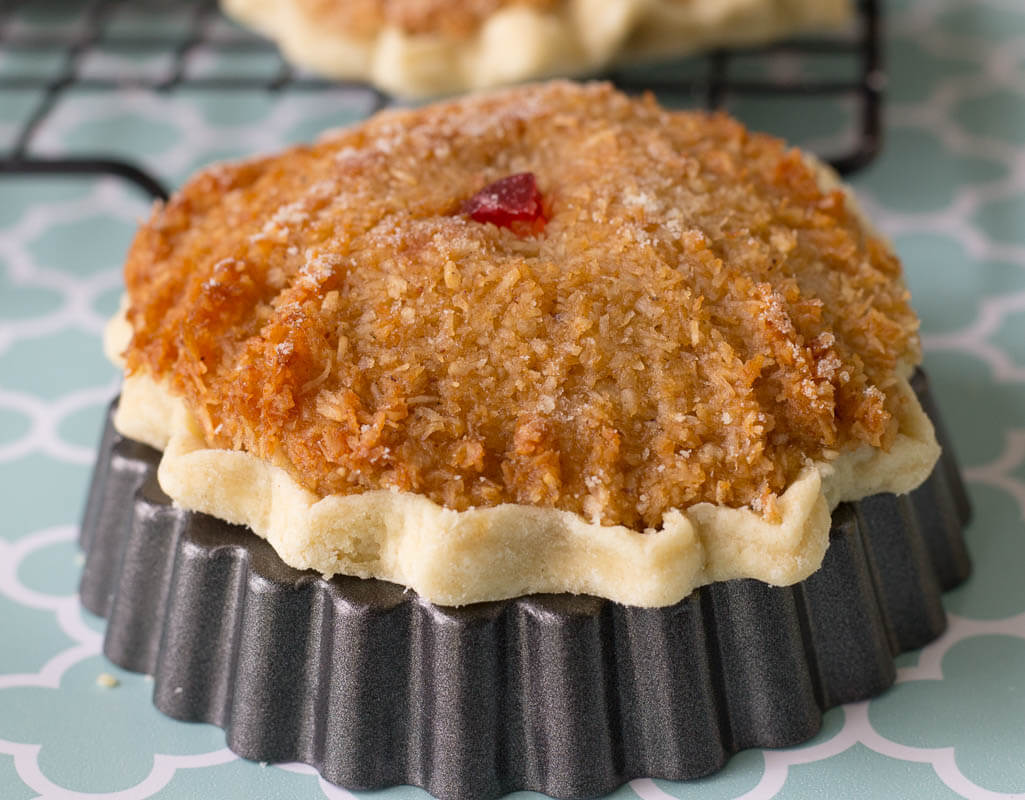
To get the traditional gizzada shape, pinch the dough around the edge to create a raised border that will hold the coconut filling. You can also press the dough into small tart pans if you prefer.
Place the shells on an ungreased baking sheet and pre-bake for 15 minutes.
- Fill and bake
Carefully spoon the cooled coconut filling into each pre-baked shell.
If using the maraschino cherries, place half a cherry in the center of each gizzada. Return them to the oven and bake for another 20 minutes.
Then cool them on a wire rack before serving.
Tips for making gizzada
- Keep the pastry ingredients cold. Use cold water when making the dough and give it the full 30 minutes in the fridge before rolling. This helps keep the pastry flaky.
- Don’t process the coconut too finely. Gizzada should have some texture, so grate the coconut or pulse it until you have coarse pieces rather than a paste.
- Don’t cook the filling dry. You want the coconut mixture thick and sticky, with some syrup remaining. If you cook away all the moisture, the filling can become dry once it goes into the oven.
- Cool the filling before assembling. Adding hot coconut filling to the pastry can soften the shell. Let it cool completely while you prepare and pre-bake the pastry.
- Pre-bake the shells. Those first 15 minutes give the pastry a head start before the moist coconut filling is added and help prevent a soggy bottom.
- Pinch the edges firmly. If you’re making the traditional free-form shape instead of using tart pans, make firm pinches around the entire edge so the border holds its shape while baking.
Variations and substitutions
You can make a few simple adjustments depending on what you have available or how you like your coconut filling.
- Add fresh ginger: For a little more spice, add some finely grated fresh ginger to the coconut mixture as it cooks. Ginger pairs especially well with coconut and gives the filling a little extra bite.
- Use desiccated coconut: Fresh dry coconut gives you the best texture, but unsweetened desiccated coconut can work if fresh isn’t available. Since it’s much drier than fresh coconut, I’d hydrate it with a little warm water first before using it in the filling.
- Skip the cherry: The maraschino cherry is optional. Leave it off if you don’t have any or simply prefer your gizzada without it.
- Make smaller gizzadas: You can use a smaller round cutter to make mini gizzadas for parties or gatherings. Keep an eye on them while baking since smaller shells may need less time in the oven.
How to store gizzada
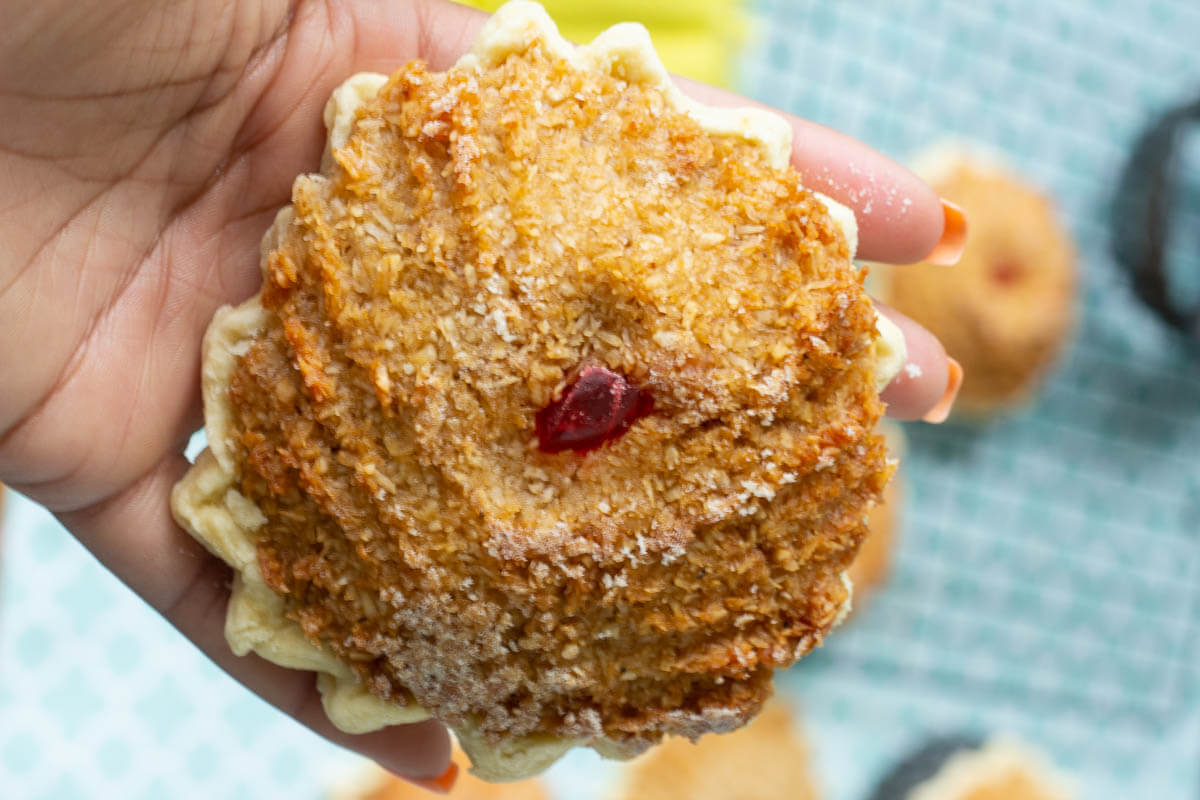
Once completely cooled, store gizzadas in an airtight container at room temperature for up to 3 to 4 days. For longer storage, keep them in the refrigerator for up to 1 week.
You can also freeze baked gizzadas for up to 3 months. Wrap them individually before placing them in a freezer-safe container or bag. Let them thaw before warming them briefly in a low oven to help bring back some of the pastry’s texture.
Can you make gizzada ahead of time?
Yes. You can prepare both the pastry dough and coconut filling ahead of time and keep them separately in the refrigerator. Wrap the dough well and store the cooled filling in an airtight container, then shape, fill, and bake the gizzadas when you’re ready.
Frequently Asked Questions
The nickname comes from the way the pastry is shaped. The dough is pinched repeatedly around the outside edge, creating the raised border that holds the coconut filling and gives gizzada its distinctive look.
Fresh coconut gives the filling its best texture, but unsweetened packaged coconut can be used when fresh isn’t available. If using dried or desiccated coconut, rehydrate it with a little warm water first so the finished filling isn’t too dry.
Pre-baking gives the pastry time to begin cooking before the moist coconut filling is added. This helps the shell stay crisp and reduces the chance of a soggy bottom.
Absolutely. You don’t need tart pans to make traditional gizzada. Cut the dough into circles and pinch around the edges with your fingers to create a raised border for the filling.
More coconut favorites
If coconut is the reason you ended up here, I’ve got you. Try some of these other coconut recipes:
If you love coconut desserts, give this Jamaican gizzada recipe a try. That flaky pastry with the sticky, spiced coconut filling makes these little tarts well worth the effort.
If you make this recipe, let me know how it turned out in the comments below. And don’t forget to leave a star rating!
Recipe
Jamaican Gizzada
Ingredients
Method
- Make the coconut filling
- Add the water and brown sugar to a heavy-bottomed saucepan over low heat.
- Cook until the sugar dissolves and forms a syrup.
- Add the grated coconut and nutmeg. Cook for about 10 minutes, stirring occasionally.
- Add the butter and stir until completely melted and incorporated.
- Remove from the heat and set aside to cool completely.
- Make the pastry shells
- Preheat the oven to 350°F.
- Sift the flour and salt together in a large bowl.
- Cut the shortening and margarine into the flour mixture until incorporated.
- Gradually add the cold water and mix until a dough forms.
- Wrap the dough in plastic wrap and refrigerate for 30 minutes.
- On a lightly floured surface, roll the dough to about ¼-inch thick.
- Using a 4-inch round cutter or glass, cut circles from the dough. Pinch around the edges of each circle to create a raised border. If using small tart pans, press the dough into the pans and trim away any excess.
- Place the pastry shells on an ungreased baking sheet and bake for 15 minutes.
- Remove from the oven and carefully spoon the cooled coconut filling into each shell.
- If using, place half a maraschino cherry in the center of each gizzada.
- Return to the oven and bake for another 20 minutes.
- Transfer to a wire rack and allow to cool before serving.
Nutrition
Notes
Don’t cook the coconut filling until dry. It should still be sticky and slightly syrupy when you remove it from the heat.
Allow the filling to cool completely before adding it to the pre-baked pastry shells.
Fresh dry coconut gives the filling the best texture, but rehydrated unsweetened desiccated coconut can be used if needed.
Yield: This recipe makes about 6 gizzadas when using a 4-inch cutter. The total yield will vary depending on the size of your cutter and how thick you roll the pastry.
Recipe Printed From ThisBagoGirl.com